The Release Train Engineer in 60 seconds
- Definition: "a servant leader and ART coach who facilitates ART events and processes, and supports teams in delivering value."[1]
- Signature job: leading PI Planning.[2]
- Works with: Product Management, the System Architect and Business Owners, as part of ART leadership.[3]
- Closest analogy: "the chief Scrum Master/Team Coach for the train."[4]
- Pay: US averages of about $111,000 to $120,000 a year on two salary aggregators in 2026.[5][6]
What is a Release Train Engineer?
A Release Train Engineer (RTE) is the person who keeps an Agile Release Train running. The RTE facilitates the train's events, most visibly PI Planning, helps teams deliver, removes impediments that teams cannot remove themselves, and drives improvement across the train.
The title is slightly misleading. An RTE is not an engineer in the technical sense and does not manage releases. The role is closer to a coach and facilitator for 50 to 125 people.[7] SAFe's summary is that the RTE "facilitates communication with stakeholders, problem-solving, and risk management", and "manages impediments and fosters continuous improvement."[3]
The phrase that matters is servant leader. An RTE has little formal authority over the teams. The job is done through facilitation, transparency and trust, not through instructions.
What does a Release Train Engineer do?
The RTE prepares and leads PI Planning, runs the ART Sync, tracks progress and dependencies through the interval, manages risks and impediments, reports to stakeholders, and leads Inspect and Adapt.
SAFe's public summary of the role adds detail:
- "The RTE coaches the ART through continuous exploration and backlog refinement ahead of facilitating PI Planning."[3]
- "The RTE helps optimize flow with metrics, coaching teams on applying flow accelerators, and facilitating value stream mapping."[3]
- The RTE is "integral to the ART leadership, collaborating with Product Management, the System Architect, and Business Owners."[3]
What does the RTE do at each stage of a planning interval?
Before the PI the RTE prepares the event and checks readiness. During PI Planning the RTE facilitates. Through the iterations the RTE runs the syncs and tracks the plan. At the end the RTE leads Inspect and Adapt and starts preparing the next PI.
| Stage | What the RTE does |
|---|---|
| 4 to 6 weeks before | Confirms dates and attendance, checks that features are refined and ranked, prepares the board and the agenda. See the PI Planning checklist. |
| PI Planning | Leads the event[2], keeps time, runs the management review, facilitates the risk discussion and the confidence vote. |
| Every week | Runs the ART Sync, reviews dependencies and risks, escalates impediments. |
| Every iteration | Leads the System Demo[8] and checks progress against PI Objectives. |
| IP iteration | Prepares and leads Inspect and Adapt, and gets the next PI ready. |
| Continuously | Coaches Scrum Masters and leaders, and works on the improvement items the train agreed. |
How is an RTE different from a Scrum Master, a programme manager or an STE?
A Scrum Master or Team Coach serves one team. An RTE serves the whole train. A Solution Train Engineer serves several trains. A traditional programme manager directs work and owns a plan, where an RTE facilitates the people who own it.
| Role | Scope | How it differs from the RTE |
|---|---|---|
| Scrum Master / Team Coach | One agile team | "A servant leader and coach for an Agile team."[1] Can be part-time.[9] The RTE does the same job one level up. |
| Release Train Engineer | One ART, 50 to 125 people | The subject of this guide. |
| Solution Train Engineer | Several ARTs and suppliers | "Facilitates Solution Train events and processes, coordinates the work of ARTs and Suppliers."[1] STE and RTEs form "a coordination and facilitation network."[10] |
| Programme manager | A programme of projects | Typically owns scope, budget and schedule and assigns work. The RTE facilitates teams that plan their own work. |
| Product Management | What the train builds | Owns the backlog and priorities. The RTE owns how the train works, not what it builds. |
Many RTEs come from programme or project management. The hard part of that move is letting go of the plan. On a train the plan belongs to the teams, and the RTE's value is in making sure it is a good one.
What skills does a Release Train Engineer need?
An RTE needs facilitation skills for large groups, a solid grasp of Lean-Agile practice and SAFe, the ability to read flow and predictability data, and the credibility to challenge senior stakeholders.
- Large-group facilitation. Running a two-day event for a hundred people, in a room or online.
- Systems thinking. Seeing that a late feature is usually a symptom of a dependency or a queue.
- Conflict handling. Scope, capacity and priority disputes land on the RTE.
- Data literacy. Predictability, flow metrics, scope change. See agile metrics.
- Coaching. Of Scrum Masters, Product Owners and managers.
- Communication upwards. Telling leaders what the data says, including when it is unwelcome.
What is the SAFe RTE certification?
Scaled Agile offers the SAFe Release Train Engineer certification. It is an advanced-level course and exam. The exam has 60 questions in 120 minutes with a pass mark of 82%, and the certification is renewed yearly.[11]
Scaled Agile describes it as "designed for Program Managers and Agile Coaches who currently oversee multiple teams and aspire to transition into the RTE role", and expects candidates to be familiar with the SAFe Agilist and SAFe Scrum Master roles.[11] The exam domains show where the weight lies:
| Exam domain | Weight |
|---|---|
| Exploring the RTE role and responsibilities | 16 to 18% |
| Fostering relentless improvement | 16 to 18% |
| Applying AI to the RTE role | 14 to 16% |
| Supporting PI execution | 12 to 14% |
| Coaching the ART | 12 to 14% |
| Facilitating PI Planning | 9 to 11% |
| Organizing the ART | 7 to 9% |
| Optimizing flow | 6 to 8% |
A certificate helps you get an interview. It does not replace having run a few planning events. If you are new to the role, shadow an experienced RTE through one full PI before leading your own.
How much does a Release Train Engineer earn?
Published US averages for Release Train Engineers in 2026 are about $111,000 to $120,000 a year, depending on the source. Figures vary a lot by location, industry and experience, so treat any single number as a rough guide.
| Source | Average | Range or note |
|---|---|---|
| Talent.com, 2026[5] | $120,000 a year | Entry level from $94,244, most experienced up to $164,050. Based on 10,000 salaries. |
| Comparably, October 2026[6] | $110,892 a year | Highest in San Jose, California. |
Other salary sites report higher and lower numbers that we could not verify directly, so they are not quoted here. Outside the US, pay follows the local market for senior agile coaches and programme managers.
What tools does a Release Train Engineer need?
An RTE needs one place that shows the whole train: the plan by team and iteration, dependencies, PI Objectives, risks, and what has changed since planning. Team tools show a sprint well and a train poorly.
- A planning board for the event, with capacity per team and iteration.
- Dependency tracking with dates and owners. See the dependency management guide.
- PI Objectives with planned and actual business value.
- A ROAM risk register. See the ROAM guide.
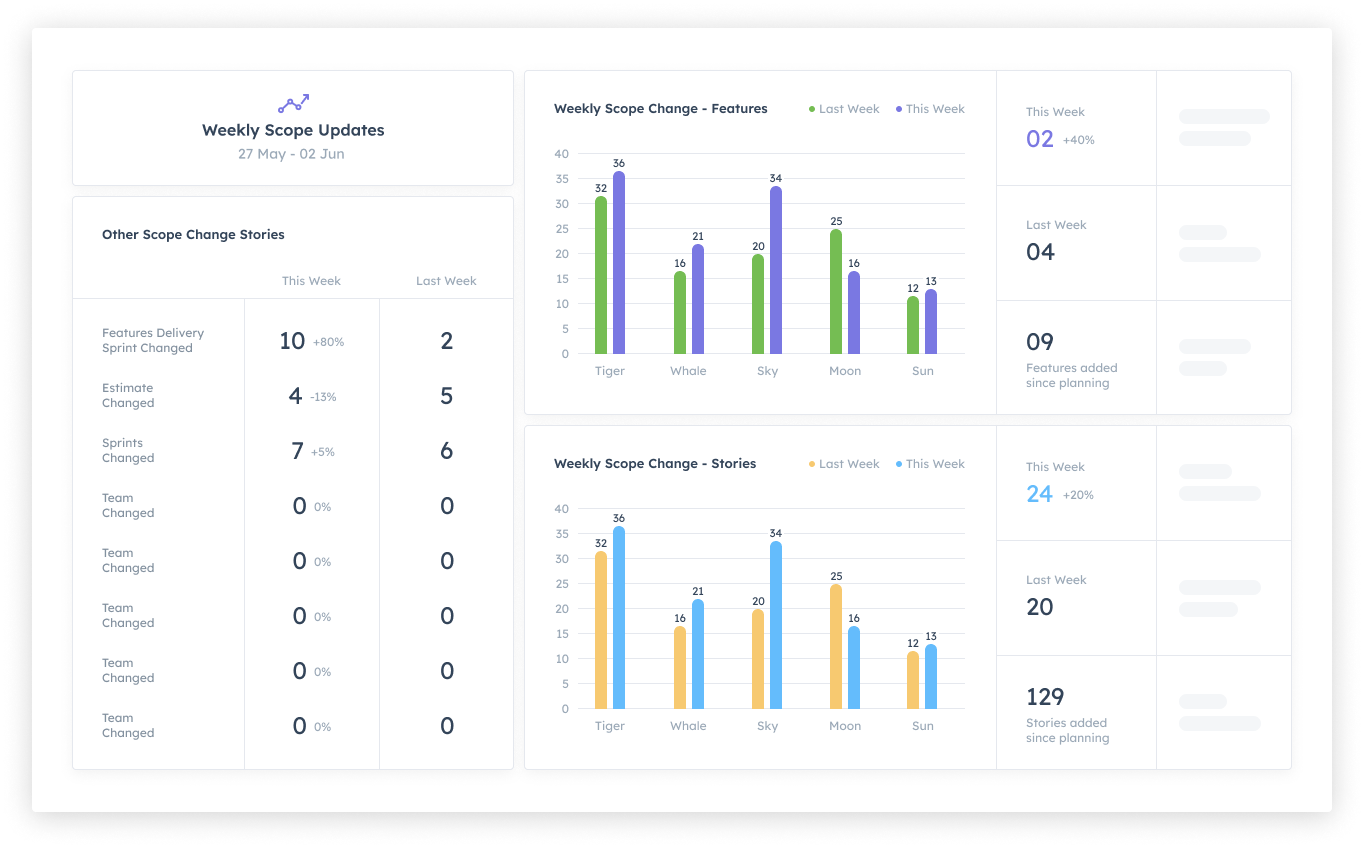
- Baseline and scope change so the RTE can answer "what changed?" without a spreadsheet.
- Predictability and flow reports for Inspect and Adapt.
Kendis is built around this list and syncs both ways with Jira and Azure DevOps. See the program board and Inspect and Adapt.
Put this into practice, free for 6 months
Kendis is a PI Planning and tracking platform that sits on top of Jira and Azure DevOps. The free trial runs for six months, long enough to plan and track two full PIs with your real backlog before anyone has to approve a budget.
- 6 months free, no credit card
- Choose EU hosting (OVHcloud, Frankfurt) or US hosting (AWS)
- Planning board, dependencies, PI objectives, ROAM risks, solution boards
- Two-way sync with Jira Cloud, Jira Data Center and Azure DevOps
- ISO/IEC 27001 certified, GDPR compliant, DORA Schedule available
- No user caps and no setup costs during the trial
One trial per organisation that has not used Kendis in the last twelve months. After the trial, Premium Cloud is $14 per user per month billed annually, or $16 monthly, and you license only the people who plan. SSO, Kendis AI and premium support are part of paid plans. See pricing and the free trial terms.
Release Train Engineer: frequently asked questions
What is a Release Train Engineer?
A Release Train Engineer (RTE) is a servant leader and ART coach who facilitates Agile Release Train events and processes and supports teams in delivering value. The RTE leads PI Planning.
Is a Release Train Engineer the same as a Scrum Master?
No. A Scrum Master or Team Coach serves a single agile team. An RTE does a similar job for the whole Agile Release Train of 50 to 125 people. SAFe has described the RTE as the chief Scrum Master for the train.
Is an RTE a project manager?
Not in the traditional sense. A project or programme manager typically owns the plan and assigns work. An RTE facilitates teams that plan their own work, and focuses on flow, impediments and improvement.
What does a Release Train Engineer do in PI Planning?
The RTE prepares and leads the event: presenting the planning process, keeping the agenda on time, running the management review, facilitating the risk discussion and holding the confidence vote.
How do you become a Release Train Engineer?
Most RTEs have experience as a Scrum Master, agile coach or programme manager, add SAFe training, and then lead a train with support from an experienced RTE. Scaled Agile offers a SAFe Release Train Engineer certification.
How much does a Release Train Engineer make?
In the United States, two salary aggregators reported averages of about $111,000 and $120,000 a year in 2026. Pay varies widely by location, industry and experience.
What is the difference between an RTE and an STE?
An RTE serves one Agile Release Train. A Solution Train Engineer (STE) serves a Solution Train, coordinating several ARTs and suppliers that build one large solution.
Sources
Every external claim in this guide links to the primary source below. All links were checked on 12 October 2026.
- Scaled Agile, Inc.. SAFe Glossary.
- Scaled Agile, Inc.. PI Planning.
- Scaled Agile, Inc.. Release Train Engineer.
- Scaled Agile, Inc.. Essential SAFe (last updated 30 November 2022).
- Talent.com. Release train engineer: average salary in the United States, 2026.
- Comparably. Release Train Engineer salary (October 2026).
- Scaled Agile, Inc.. Agile Release Train.
- Scaled Agile, Inc.. System Demo.
- Scaled Agile, Inc.. Scrum Master/Team Coach.
- Scaled Agile, Inc.. Solution Train Engineer (Extended Guidance).
- Scaled Agile, Inc.. SAFe Release Train Engineer certification.
How this guide is maintained: definitions are checked against the framework pages and other primary sources listed above, and the guide is updated when terminology or guidance changes. Examples, checklists and practical advice are Kendis guidance and are not official SAFe material. SAFe and Scaled Agile Framework are registered trademarks of Scaled Agile, Inc.